If you’ve ever stood in front of your bathroom mirror wondering, “Should I brush before or after mouthwash?” you’re not alone. This is one of the most common questions patients ask us at Periodontal Health Center.
The good news? For most people, the answer is simple: brush first, then use mouthwash.
Mouthwash can be a helpful addition to your oral hygiene routine, but it works best when it’s used alongside (not instead of) brushing and flossing. Using it at the right time can help you get the most benefit, especially if you’re using fluoride toothpaste or a therapeutic rinse to support your gum health.
At Periodontal Health Center, our board-certified periodontists provide specialized gum care for patients throughout Tampa Bay. Dr. Mashkouri, Dr. Medina, and Dr. Stilley help patients prevent, manage, and treat gum disease with personalized recommendations that fit their everyday routines.
Let’s talk about when to use mouthwash and what your periodontist recommends.
The Short Answer: Brush First, Then Use Mouthwash
If you’re wondering whether mouthwash before or after brushing is better, the recommendation for most patients is:
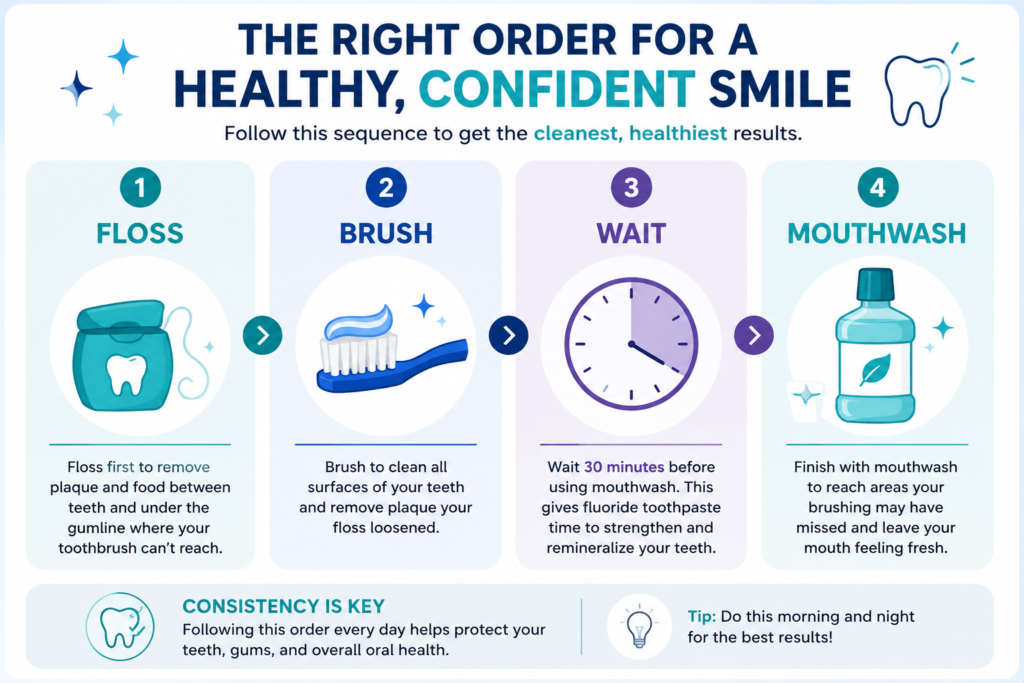
Here’s what that looks like:
- Floss to remove plaque and food particles between your teeth.
- Brush for two minutes with fluoride toothpaste.
- Wait about 30 minutes if possible.
- Use mouthwash as recommended.
Brushing first allows your toothpaste to do its job by removing plaque and delivering fluoride to your teeth. Mouthwash can then provide additional benefits, such as helping reduce bacteria, freshening breath, and supporting gum health.
Brush Before or After Mouthwash? What Periodontists Recommend
Whether you’ve searched “brush before or after mouthwash,” “mouthwash before or after brushing teeth,” or asked, “Do you use mouthwash before or after you brush?” the answer is generally the same: brush first.
Think of mouthwash as the finishing step, not the cleaning step.
Your toothbrush removes plaque, which is the sticky film of bacteria that builds up on your teeth throughout the day. Your fluoride toothpaste also helps strengthen enamel and protect against cavities.
Once your teeth are clean, mouthwash can reach areas that brushing may miss and provide additional protection.
Why Does Brushing First Matter?
Many patients don’t realize that fluoride toothpaste continues working after you brush.
When you brush, fluoride remains on your teeth and helps strengthen enamel. If you immediately rinse with a non-fluoride mouthwash, you may wash away some of that fluoride before it has time to provide maximum protection.
That’s why we typically recommend giving your toothpaste time to work before using mouthwash.
A small change in your routine—waiting a little longer before rinsing—can help you get more from your daily oral care.
Are There Any Exceptions?
Yes. Your routine may be different if you’re using a prescription mouthwash or a product recommended specifically for your oral health needs.
For example, patients with gum disease may be prescribed antimicrobial rinses, such as chlorhexidine, to help reduce harmful bacteria. These rinses should always be used exactly as directed by your periodontist.
If you’re unsure whether you need a therapeutic mouthwash or which product is right for you, your periodontal team can help you choose the best option.
When Should You Use Mouthwash? Morning or Night?
Many patients ask us, “When should I use mouthwash?” The answer depends on your goals and the type of rinse you’re using.
For most people, either morning or evening use can be beneficial.
Morning Use
Morning mouthwash can:
- Freshen your breath after sleeping
- Reduce bacteria that build up overnight
- Leave your mouth feeling clean before starting your day
Nighttime Use
Many periodontists recommend using therapeutic mouthwash before bed. Because saliva production decreases while you sleep, bacteria can grow more easily. Using mouthwash at night may help:
- Reduce bacteria overnight
- Support healthier gums
- Allow active ingredients to remain on your teeth and gums longer
What About After Meals?
If you can’t brush after eating, mouthwash can be a helpful temporary option. It may freshen your breath and help reduce bacteria until you’re able to brush.
Just remember: mouthwash does not replace brushing and flossing.
How Long Should I Wait to Use Mouthwash After Brushing?
If you’ve brushed with fluoride toothpaste, wait about 30 minutes before using mouthwash. This allows fluoride to stay on your teeth longer and strengthen enamel.
If you’re using a prescription or fluoride rinse, follow your periodontist’s instructions or the product label.
Should You Rinse After Mouthwash?
Usually, no.
After using mouthwash:
- Swish for 30–60 seconds
- Spit it out
- Don’t rinse with water afterward.
Rinsing immediately washes away the active ingredients. Many products also recommend avoiding food and drinks for about 30 minutes.
Is Mouthwash Enough to Prevent Gum Disease?
No. Mouthwash helps reduce bacteria but cannot remove plaque.
Plaque must be removed with brushing and flossing. If left behind, it can harden into tartar, irritate your gums, and contribute to periodontal disease.
Healthy gums require:
- Daily brushing
- Flossing or cleaning between teeth
- Professional dental cleanings
- Regular periodontal maintenance
For patients with gum disease, therapeutic mouthwash can be an effective part of treatment—but it works best alongside professional periodontal care.
The Periodontist-Recommended Daily Routine
Healthy gums come down to consistency.
- Floss Every Day: Floss removes plaque and food particles from between your teeth and below the gumline, where your toothbrush can’t reach.
- Brush Twice a Day: Use a soft-bristled toothbrush and fluoride toothpaste for at least two minutes, paying extra attention to the gumline.
- Wait Before Using Mouthwash: If possible, wait about 30 minutes after brushing to maximize the benefits of fluoride toothpaste.
- Use a Therapeutic Mouthwash if Recommended: If you have gingivitis, periodontal disease, chronic bad breath, or are recovering from treatment, your periodontist may recommend a therapeutic or prescription rinse
- Keep Regular Periodontal Visits: Professional cleanings remove tartar that brushing and flossing can’t and help prevent gum disease from progressing.
Frequently Asked Questions (People Also Ask)
How long should I wait to use mouthwash after brushing?
If you’ve brushed with fluoride toothpaste, try waiting approximately 30 minutes before using mouthwash. This helps maximize the cavity-fighting benefits of fluoride. If you’re using a prescription mouthwash, follow your periodontist’s instructions.
Should I use mouthwash in the morning or at night?
Both times can be beneficial.
Morning use helps freshen your breath and reduce bacteria that build up overnight, while nighttime use may provide additional protection because saliva production naturally decreases while you sleep. Many periodontists recommend using a therapeutic mouthwash before bed, particularly for patients with gingivitis or periodontal disease.
Should you rinse after mouthwash?
No. After using mouthwash, spit it out but avoid rinsing with water unless the product instructions say otherwise. This allows the active ingredients to remain on your teeth and gums longer, improving their effectiveness.
Can mouthwash replace brushing and flossing?
No. Mouthwash helps reduce bacteria and freshen your breath, but it cannot remove plaque or tartar. Daily brushing, flossing, and regular professional cleanings remain the foundation of good oral health.
The Bottom Line: Use Mouthwash as Part of a Healthy Routine
So, should you brush before or after mouthwash?
For most people, the answer is:
Brush first, wait if possible, then use mouthwash.
This simple routine helps maximize the benefits of fluoride toothpaste while allowing mouthwash to support your overall oral health.
If you’re experiencing bleeding gums, gum recession, persistent bad breath, or other signs of periodontal disease, mouthwash alone may not be enough.
The board-certified periodontists at Periodontal Health Center—Dr. Mashkouri, Dr. Medina, and Dr. Stilley—are here to help patients throughout Tampa and New Port Richey (Trinity) achieve healthier gums and healthier smiles.
Schedule your periodontal evaluation today and take the next step toward protecting your smile for years to come.